A Year After LoC Shelling, Uri Residents Living On Edge
-
 Idrees Bukhtiyar
- Comments 0
- 06 May 2026
Srinagar, May 6: One year after Operation Sindoor lit up the Line of Control (LoC) with one of the most intense spells of cross-border shelling in recent years, life in the frontier villages of north Kashmir’s Uri sector remains fragile, uncertain, and scarred by memory.
Launched in the intervening night of May 7 last year, Operation Sindoor was a major military response along the LoC that triggered heavy exchanges of artillery fire between India and Pakistan. While officials described it as a strategic operation aimed at countering cross-border threats, for civilians living along the border, it translated into a night of terror, displacement, and destruction.
A year later, the echoes of that night still linger in the damaged homes and unsettled lives of the people who live closest to the LoC.
When the Rising Kashmir team travelled to the remote border villages of Uri to assess what has changed since then, the overwhelming sentiment among residents was one of neglect and fear. For many, little has improved.
Mohd Sadeeq Khan (45), a resident of Ramgai village, is still waiting to rebuild his home that was damaged in the shelling.
“I don’t have enough money to reconstruct my house. Since that night, I have been living in a makeshift accommodation arranged by the government,” he said.
Recalling the night of the operation, his voice trembles.
“We had never seen such shelling before. It felt like shells were raining from the sky. We ran and took shelter in a small underground space. Our house was badly damaged.”
Similar memories haunt Bashir Bhat (40) of Garkote village, who still shudders at the thought of that night.
“I don’t want to relive it,” he said quietly. “We were huddled in a small space beneath our house. The shelling was so intense, it felt like raining fire. I pray such a day never returns.”
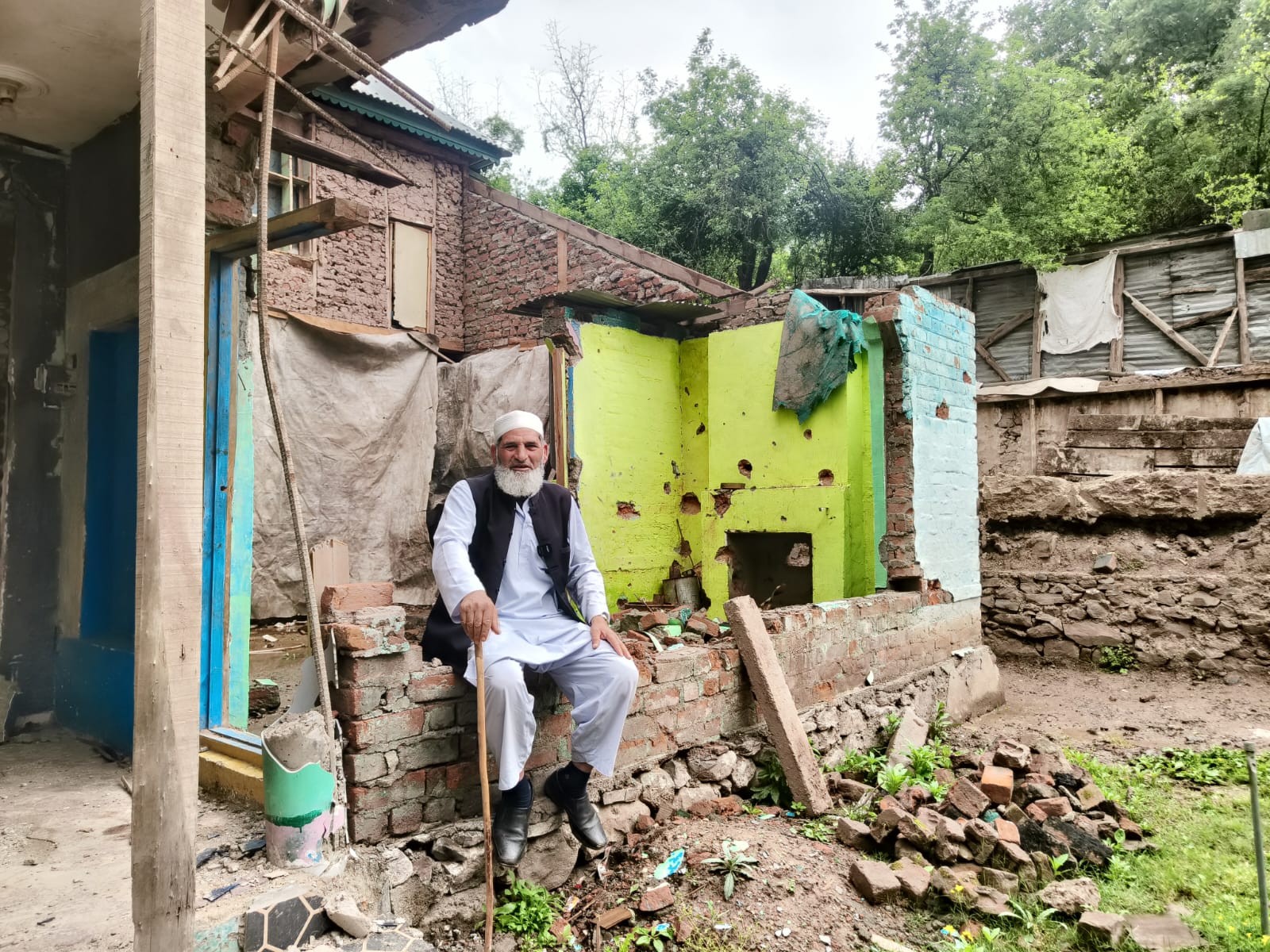
In Nowpora, one of the worst-affected villages, 85-year-old Mohd Sultan Naik says the aftermath has been as painful as the incident itself.
“Since then, my family and I have been living in temporary shelter. We have not been properly rehabilitated. Our house is still damaged, and we cannot afford to rebuild,” he said, adding that the experience has taken a toll on his health.
Residents across villages allege that the compensation provided by the government reportedly up to Rs 2 lakh per family has been grossly inadequate.
“With Rs 1.06 lakh, you can’t even lay the foundation of a house here,” said Zeenat Begum of Nowpora, her frustration evident. “How are we supposed to rebuild everything with such a small amount?”
Beyond compensation, the lack of protective infrastructure remains a major concern.
Lal Hussain Kohli from Charunda village said that promises of safety measures have not materialised.
“Not a single community bunker has been built here after Operation Sindoor. Authorities claim a lot has been done, but on the ground, we see nothing. Who will ensure our safety if shelling happens again?” he asked.
Others echoed the demand for durable safety structures. “Overhead trenches are not enough. They cannot withstand heavy shelling,” said Tariq Hashim of Kamalkote. “We need proper underground bunkers.
“Every time tensions rise, we are forced to flee or risk our lives in unsafe shelters.”
For many, the psychological impact remains as deep as the physical damage.
Saima, a local resident who witnessed the events of that night, lives in constant fear of a repeat.
“The government says Operation Sindoor is still ongoing. If it happens again, where will we go?” she asked. “We will die for something that is not our fault.”
As the anniversary of Operation Sindoor passes, the border residents of Uri continue to measure time not in years, but in the distance between one ceasefire violation and the next. For them, peace remains uncertain, rehabilitation incomplete, and the sense of security elusive leaving them, even today, living on the edge.
Related Posts
-

Gulshan Books: A cultural space for readers & thinkers
-

Kashmir’s singing sensation Aejaz Rah transitions from music to silver screen
-

No sour grapes as G’bal farmers reap high-quality bumper harvest
-

Hope rekindled in J&K’s Tourism Sector after CM's assurances
-

“Kashmir is Calling”: First road show from Dal Lake to Anantnag sends a message of peace & unity
-

Inspired by output, Kokernag farmers plants hope with Hazelnuts
-

As calm returns to LoC, border families face long road to recovery
-

J&K sizzles under relentless heatwave, docs urge precaution
-

Pahalgam attack shatters Kashmir’s film tourism revival
-

Tourism defies Terror: ‘Chalo Kashmir’ sends national message of unity
-

Kashmiri Haj pilgrims fight for basic comfort & care in Saudi Arabia
-

With pen as sword, Chander M Bhat’s fight to preserve Kashmiri Pandit culture
-

First Cherry cargo train set to depart from J&K for Mumbai on June 3
-

35-year battle ends with Shiv Lingam’s return to Jogishwari Mandir, Rainawari
-

Eid-ul-Adha Gift: In a first, SMC to provide free door-to-door hooper service for safe disposal of animal waste

Leave a comment