Saving Our Youth: A Collective Duty
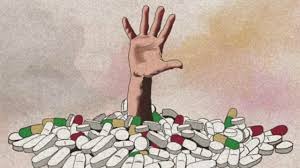
Reclaiming values, restoring direction, and securing the future of Jammu and Kashmir’s youth
In the culturally rich and historically resilient society of Jammu & Kashmir, a quiet but deeply concerning crisis is taking root. Drug abuse, once seen as a distant threat, is now emerging within communities, affecting the youth— the very foundation upon which the future of the region rests.
This is not merely a matter of law enforcement. It is a societal challenge, one that calls for reflection, responsibility, and collective action across all sections of society.
Jammu & Kashmir has always prided itself on strong cultural values—respect for elders, close-knit family structures, dignity of labour, and a deep sense of belonging. These values have historically acted as a protective shield for the younger generation. However, with changing times and a gradual disconnect from these core principles, that shield has begun to weaken.
The need of the hour is to re-anchor the youth in value-based living. Success must not be defined merely in terms of material gain, but through integrity, discipline, and rightful earning. When society celebrates honest effort over shortcuts, it naturally discourages the appeal of destructive habits.
Families must reclaim their role as the first and most influential institutions of character-building. Beyond academic success, there must be open conversations about life choices, peer pressure, and emotional well-being. Teenagers—both boys and girls—must be made fully aware of the serious repercussions of substance abuse, not through fear alone, but through a clear understanding of its long-term impact on health, dignity, and future opportunities.
Educational institutions must also step forward with structured awareness programs. Regular workshops, peer discussions, and engagement with counsellors can create an environment where students feel safe to ask questions and seek guidance. Awareness is not a one-time campaign; it must be a continuous process embedded within the education system.
Equally significant is the role of religious and spiritual leaders, who hold immense influence in shaping social attitudes. Their focus must evolve from predominantly formal or ritualistic practices to value-based guidance. They must emphasise purpose, self-discipline, compassion, and moral responsibility. Faith, when connected with meaning rather than mere form, becomes a powerful force in steering youth away from harmful paths.
Civil society, too, must act with responsibility. Capable, ethical, and forward-thinking individuals must be chosen as leaders within communities. Leadership should not be symbolic—it must be effective. When the right individuals lead, they create environments where young people feel supported, guided, and inspired.
The role of politicians and policymakers is equally critical. Their policies must move beyond rhetoric and become genuinely pro-youth in substance and execution. This includes creating meaningful employment opportunities, expanding skill development initiatives, strengthening mental health and counselling infrastructure, and investing in sports, arts, and youth engagement platforms. Young people need direction, opportunity, and hope—policies that fail to address these needs leave them vulnerable to negative influences.
At the enforcement level, the role of the police must also evolve. While strict action against illegal activities remains necessary, policing must not be limited to arrests alone. There is a growing need for community-oriented policing, where authorities also focus on prevention and rehabilitation. Establishing counselling cells within police systems, in collaboration with mental health professionals and social workers, can provide early intervention and guidance to at-risk youth. Such initiatives would transform the approach from purely punitive to corrective and supportive.
Another critical area is community-level engagement. Local committees, parent groups, and youth forums should actively work together to identify early signs of distress and intervene constructively. Rehabilitation must be approached with empathy rather than stigma. Individuals who fall into substance abuse need support systems, not isolation.
Media and digital platforms also play a powerful role in shaping perceptions. Narratives that glorify reckless lifestyles must be countered with stories of discipline, resilience, and real achievement. Positive role models from within the region—teachers, entrepreneurs, artists, and professionals—should be highlighted to inspire the younger generation.
Moreover, creating safe and constructive public spaces is essential. Libraries, sports facilities, cultural centres, and innovation hubs provide healthy alternatives for engagement. When youth have access to meaningful activities, the attraction towards harmful habits diminishes significantly.
Importantly, addressing drug abuse requires coordination across all sectors. Families, schools, religious institutions, civil society, law enforcement, and policymakers must function as part of a unified framework. Fragmented efforts cannot address a problem that is deeply interconnected.
The challenge before Jammu & Kashmir is serious, but not insurmountable. The region has always drawn strength from its heritage, resilience, and strong community bonds. By reconnecting with foundational values, empowering youth with purpose, and ensuring responsible leadership at every level, it can effectively counter this growing concern.
In this context, the proactive role of governance assumes critical importance. The recent initiatives led by the Hon’ble Lt. Governor, particularly the focused anti-drug campaigns, represent a decisive and welcome step. Such efforts reflect an acknowledgment that the issue demands sustained administrative attention and coordinated action. However, their success will ultimately depend on continuity, grassroots reach, and meaningful integration with societal efforts.
The future of Jammu & Kashmir lies in the hands of its youth. Guiding them in the right direction is not merely a choice—it is a collective duty. A society that invests in its young generation today secures a stronger, healthier, and more responsible tomorrow.
(The Author can be reached at: smmrtzbkhr@gmail.com)
Related Posts
-

The Army Without Borders: Iran's Sixty Groups and the New Shape of War
-

Why Mental Health Matters in the Age of AI
-

Mastitis: A Silent Threat to Dairy Farming
-

THE RENTIER WORLD ORDER, We Are All Tenants Now and the Landlord Is an Algorithm
-

Redefining Masculinity: Beyond Strength and Control
-

Can Kashmir Valley’s Schools Go Truly Smart?
-

Cancer in Kashmir: A Growing Epidemic That Needs Immediate Attention
-

Kashmir's Political Class Has Mastered the Art of Promising Without Governing
-

Ward Three: Where Language Surrendered To Pain
-

The 11-Inch Paradox: Why Jammu Kashmir’s Start-ups Hit the Structural Wall
-

How Mission Karmayogi is Rewriting Story of India’s Governance
-

Stuck in Silence: Living with Helplessness
-

Tribal Sports Talent: Our National Pride
-

West Asia Crisis: A Wake-Up Call for India’s Boiler Users and Manufacturers
-

The Faithful and the Fish

Leave a comment