Record-Breaking Heatwaves, Climate Migration, and the Mounting Challenge for Hill Destinations
-
 SANJAY PANDITA
- Comments 0
- 30 Apr 2026
Across India and much of the world, April temperatures have soared to extraordinary levels, breaking previous records and signalling a deeply unsettling environmental transformation
SCORCHED LIVES
The earth today appears to be passing through an age of fever, where climate itself has become increasingly hostile to human comfort. The month of April, once associated with gentle warmth and the fading grace of spring, has now emerged as an alarming symbol of climatic disruption. Across India and much of the world, April temperatures have soared to extraordinary levels, breaking previous records and signalling a deeply unsettling environmental transformation. Meteorological experts warn that the coming months of May and June may prove even more severe, potentially surpassing a century of recorded heat data and establishing new, dangerous climatic benchmarks.
This temperature rise is not a temporary seasonal anomaly but rather a consequence of accelerating global warming, environmental degradation, rampant deforestation, industrial pollution, and unsustainable development. Climate patterns that once followed predictable rhythms are now becoming increasingly erratic. Excessive heat has transformed daily life into an exhausting struggle, particularly in densely populated urban centres where concrete landscapes trap heat and intensify discomfort.
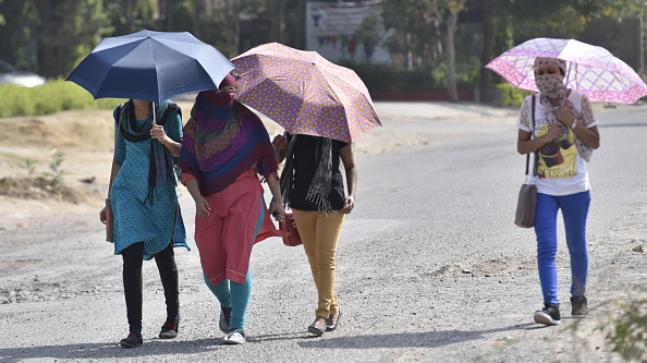
The April heat has already pushed millions into distress. Roads radiate unbearable warmth, public spaces become deserted under the oppressive sun, and even nights offer little respite. Air conditioners and cooling systems, while providing temporary relief, have become symbols of a larger irony—our methods of adaptation often contribute further to the ecological crisis. For the poor, who lack access to adequate cooling, the summer becomes not just uncomfortable but perilous.
Health implications are severe. Heatstroke, dehydration, respiratory complications, cardiovascular stress, and mental fatigue rise sharply during prolonged heatwaves. Children, the elderly, labourers, and those with preexisting health conditions are especially vulnerable. Outdoor workers, including farmers, construction labourers, street vendors, and transport workers, face direct exposure that threatens both livelihood and survival. Agricultural productivity declines as crops wither under extreme heat, increasing food insecurity and economic uncertainty.
Water scarcity compounds this crisis. Reservoirs dry faster, groundwater depletion accelerates, and glacier-fed water systems face unpredictable changes. As temperatures rise, water demand increases dramatically, creating mounting pressure on already fragile infrastructure.
Yet one of the most immediate social consequences of rising temperatures is the growing movement of people toward cooler destinations. As the plains and urban centers become increasingly intolerable during summer, hill stations and naturally cooler regions such as Kashmir, Shimla, Mussoorie, Nainital, and the northeastern states are expected to witness unprecedented tourist inflows. These destinations, traditionally seen as sanctuaries of climatic relief, may soon face overwhelming pressure from climate-driven tourism migration.
The expected surge in tourist traffic presents both opportunity and crisis. Economically, increased tourism can boost local businesses, hospitality sectors, transport services, and employment. However, without strategic planning, the sudden influx can severely strain infrastructure, disrupt local life, and damage fragile ecosystems.
Traffic congestion is likely to become one of the most immediate challenges. Narrow mountain roads, often not designed for massive vehicular volumes, may experience chronic jams, increasing travel times, fuel consumption, and pollution. Popular hill stations have already witnessed such scenarios during peak seasons, where roads become clogged for hours, emergency services are delayed, and visitor experiences deteriorate. Advanced traffic management systems, regulated vehicle entry, shuttle services, parking zones outside core tourist areas, and digital traffic monitoring will be essential.
Accommodation infrastructure also requires urgent preparedness. Hotels, guest houses, homestays, and rental properties may experience overwhelming demand, often resulting in inflated prices, overcrowding, and compromised service quality. Unregulated pricing can exploit tourists while simultaneously damaging the long-term reputation of these destinations. Governments must establish price monitoring systems, fair accommodation guidelines, and encourage sustainable expansion without ecological destruction.
Basic civic facilities—water supply, sanitation, electricity, healthcare, waste management, and emergency services—must also be strengthened. A sudden population spike during extreme summers can overwhelm existing systems, leading to shortages, poor hygiene, and environmental degradation. Waste disposal in ecologically sensitive hill regions is particularly crucial, as plastic pollution and unmanaged garbage can rapidly damage natural beauty and biodiversity.
Environmental sustainability must remain central. Hill stations and cooler regions are not limitless refuges; they are delicate ecosystems vulnerable to overdevelopment, deforestation, and resource exploitation. Reckless tourism expansion can destroy the very charm and ecological balance that attract visitors. Sustainable tourism models, carrying capacity assessments, eco-friendly transport, regulated construction, and strict environmental protections are indispensable.
Local administrations must prepare proactively rather than reactively. Seasonal forecasting, infrastructure expansion, coordinated tourism policies, law enforcement, healthcare readiness, and public communication campaigns are essential. Collaboration between tourism departments, municipal bodies, environmental agencies, and local communities can create resilient systems capable of managing climate-induced tourist surges.
Moreover, the local population’s needs must not be overshadowed by tourism economics. Residents of hill destinations should not suffer from inflated prices, water shortages, or overcrowding due to external visitor pressure. Balanced governance is essential to ensure that tourism remains beneficial rather than burdensome.
The rise in excessive heat is also reshaping tourism itself. What was once leisure-driven travel is increasingly becoming climate-driven migration for temporary survival. This shift demands a fundamental rethinking of tourism management, urban planning, and regional development.
In the broader context, this phenomenon serves as a warning that climate change is not confined to environmental discussions—it is altering human movement, economic structures, social systems, and governance priorities. The burden on cooler regions reflects the growing inability of traditional urban and lowland spaces to comfortably sustain populations during peak heat periods.
The question before policymakers is urgent: Are we prepared for this transformation? Can our hill stations, valleys, and cooler regions absorb rising tourist populations without collapsing under pressure? Can administrations ensure smooth traffic, fair pricing, sufficient accommodation, and ecological preservation?
The answers will depend on foresight, planning, and responsible governance. Climate adaptation is no longer solely about surviving heat—it is about restructuring systems to accommodate new social and environmental realities.
As temperatures continue to break historical records, the migration toward cooler destinations will likely intensify. Kashmir’s valleys, Himachal’s slopes, Uttarakhand’s hill towns, and the serene landscapes of the Northeast may increasingly become summer lifelines. But these sanctuaries can only endure if protected through wise administration, sustainable tourism, and environmental stewardship.
Humanity’s climate crisis is no longer a distant forecast—it is unfolding in real time, reshaping where and how people live, move, and seek relief. The record-breaking heat of April and the ominous summers ahead demand not only adaptation but transformation.
In this era of scorched plains and crowded hills, governance, sustainability, and preparedness will determine whether cooler destinations remain havens of refuge or become victims of the same crisis from which travellers seek escape.
(The Author is an RK columnist and can be reached at: sanjaypandita@gmail.com)
Related Posts
-

The Cost of Our Lifestyle Choices
-

Fear, Fuel, and the Politics of Perception
-

The Architect of Mu’amila-Bandi: Momin Khan Momin and the Poetics of Romantic Realism
-

Is Healthcare Sector shifting from Service-Oriented Care to Profit-Driven Practice?
-

Vanishing Wetlands in Kashmir
-

It’s The Driving Sense That Can Save Lives…!
-

Bridging the Awareness Gap and the AI-Driven Future of Mobility in Jammu & Kashmir
-

Sir Syed Sani: A Legacy of Knowledge, Unity, and Moral Authority
-

A Day of Bills and Backtracks: What NC’s Assembly moves Reveal about Legislative Intent
-

Why our Elders deserve Care, Love, and a Place at the Heart of Society
-

The Need for Corporate Social Responsibility in Kashmir Valley
-

The Plague Doctor of Islamabad
-

The Phenomenon of a Rolling Aspirant: A gentle plea to rethink career switching
-

Gender Neutral Representation in Jammu And Kashmir’s Textbooks: The Reform that Can’t Wait
-

The Dying Art of Houseboat Making

Leave a comment