Pollen Pollution Leaves People Struggling with Allergies
-
 Mansoor Peer
- Comments 0
- 07 May 2026
Invisible pollens more dangerous than Russian poplar: Health experts
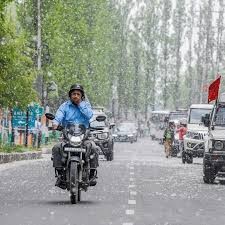
Srinagar, May 07: Kashmir is witnessing a rise in annual pollen-related allergies as pollen produced by Russian poplars and other trees clouds the air amid the pollination season.
The pollen produced by the popular, willow and other trees in May and June has triggered allergies with hospitals seeing rise in such cases with symptoms including throat infection, eye irritation, sneezing, and breathing difficulties, with children being particularly affected.
Senior pulmonologist at Government Medical College Srinagar, Dr. Naveed Nazir Shah, said that the months from March to May mark the peak pollination season in Kashmir.
He said studies have shown that grass pollen, kikar pollen and deodar pollen are causing a significant rise in allergies. Unlike Russian poplar pollen, which is visible, these pollens are mostly invisible and can be more dangerous.
“There is a pollen nuisance during this season. People who are already prone to allergies and know they may face complications should take extra precautions to prevent pollen from entering their mouth and respiratory tract,” he said.
Dr. Shah further said that the rush in OPDs increases during this period due to pollen-induced allergies. He warned that patients suffering from asthma, eye allergies or skin allergies are more vulnerable during the season, while those with severe asthma may face serious complications that can even turn fatal.
Doctors have advised people to take precautions due to the health risks associated with the pollen.
Dr Masood Rashid, Critical Care Expert with J&K Health department said that people with compromised immune systems, such as those with bronchitis or allergic rhinitis, are more susceptible to pollen allergies.
“Pollen can aggravate the allergy and may lead to an infection. It is usually treated with anti-allergic medication and is not life-threatening,” he said.
Dr Masood advised people, especially those affected by pollen to take preventive measures such as wearing masks to reduce exposure.
“Masks do help prevent pollen allergies,” he said.
The pollen has made life difficult as it affects the health of both children and adults, with the authorities nowhere to be seen regarding preventive measures.
“Every year as spring arrives Russian poplars start produce cotton fluff into the air. Elderly and children are more prone to the infection. This leads to a substantial rise in the number of patients visiting hospitals,” said Ishfaq Ahmad a Srinagar resident.
In 2015, High Court had issued orders and asked the administration across valley to cut down the Russian poplar trees, but little seems to be implemented on ground.
Despite High Court orders to axe the Russian poplars across valley, district administrations in districts have failed to axe the banned poplar trees causing inconveniences and infections.
Parents of school going children have expressed concern over allergies due to pollen dust. Presence of pollen in air has forced many people to keep their children confined to indoors.
The problem is worsening in these days as these poplars are in full bloom with pollen dust.
“We approached the administration several times, but nothing was done. Eventually, we cut down these trees at the community level. The government must take responsibility and remove such trees,” said Javid Ahmad from Baramulla.
Related Posts
-

CM Omar Abdullah rolls out ₹84.41 crore multi-sector development works to transform Ganderbal
-

risingkashmirtesting
-

Srinagar Police Register Cases Against Srinagar MP, Ex-Mayor for Circulation of Misleading Online Content
-

Mehbooba Mufti criticises Centre for not condemning killing of Khamenei; burns Netanyahu, Trump posters
-

Uri farmers oppose new water supply scheme
-

All Schools, Colleges to remain closed for two days in Kashmir: Sakina Itoo
-

Flames On The Hills: Dry spell drives wave of forest fires across Valley
-

MeT Predicts Light Rain, Snow in J&K's Higher Reaches Till March 9
-

“God saved me”: Farooq Abdullah after escaping assassination attempt in Jammu
-

Mirwaiz Welcomes SC’s Bail Decision for Shabir Shah, Seeks Relief for Other J&K Political Prisoners
-

Mirwaiz Slams Govt Over Jamia Masjid Shutdown on last Friday of Ramzan, Draws Parallel with Al-Aqsa
-

CM Omar throws open Asia’s largest Tulip Garden in Srinagar
-

MeT Predicts Light Rain, Snow in J&K’s Higher Reaches Till March 20
-

Mughal Road Closed Following Fresh Snowfall at Pir Ki Gali
-

MeT Predicts Rain, Snow in J&K’s Higher Reaches

Leave a comment