Melting Glaciers: Part 2: Kolahoi Glacier melting reduces autumn river flow by 30%
-
 Abid Bashir
- Comments 0
- 05 May 2026
• Flow fell from 2407 cusecs to 1752 cusecs • Tipping point reached in 1990s • Agri, tourism, drinking water at risk • Climate change to further reduce streamflow • Window for action rapidly closing
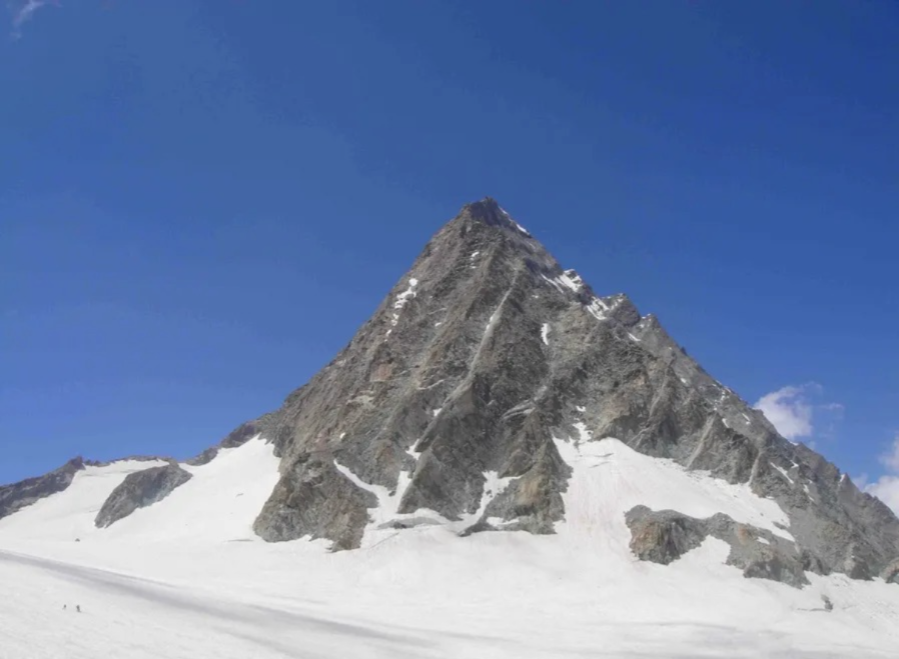
Srinagar, May 04: The rapid melting of Kolahoi Glacier is now visibly impacting river flows in Kashmir, with a study by the University of Kashmir (KU) establishing a direct link between glacier mass loss and declining streamflow in the region, especially that of the river Lidder. The study reveals that Kolahoi’s rapid retreat has reduced the autumn river flow by nearly 30 per cent, something that could set the alarm bells ringing.
The research, led by Prof Shakil Ahmad Romshoo and co-authored by Tariq Abdullah, Khalid Omar Murtaza and Mustafa Hameed Bhat, presents compelling evidence that shrinking glacier reserves are reducing the flow of the Lidder River, particularly during the autumn months.
“Analysis of long-term data shows a significant decline in autumn streamflow, which is largely sustained by glacier melt,” the study states, adding that flows have dropped by nearly 27 per cent between the 1980s and the 2010s.
The Lidder river, originating from the Kolahoi Glacier, is a vital tributary of the Jhelum River and supports agriculture, tourism and domestic water needs across south Kashmir. Any disruption in its flow has far-reaching consequences for both livelihoods and ecosystems.
According to the study, autumn streamflow has decreased from around 2407 cusecs during 1980–1990 to approximately 1752 cusecs between 2010 and 2019. This decline closely mirrors the increase in glacier mass loss during the same period.
“There is a clear correspondence between glacier mass balance and streamflow, especially during autumn when seasonal snow has already melted, and glacier melt becomes the primary water source,” the researchers note.
The findings suggest that the region has already crossed a critical “tipping point.” Initially, increased glacier melting due to rising temperatures leads to higher river flows. However, as the glacier continues to shrink, the reduced ice reserves eventually result in declining meltwater contribution.
“Previous studies and current data indicate that this tipping point in the Lidder basin was reached in the mid-1990s,” the paper highlights.
The study further warns that continued warming will exacerbate the situation. “Projected climate change is likely to accelerate glacier mass loss, leading to further reductions in streamflow,” the authors caution.
This has serious implications for the Upper Indus Basin, where glacier-fed rivers are essential for irrigation, hydropower and drinking water. Reduced flows during summer and autumn—peak demand periods—could intensify water stress in the region. The research also sheds light on the complex relationship between climate variables and hydrology. While precipitation plays a role, temperature-driven glacier melt remains the dominant factor influencing streamflow in glaciated basins.
“Even with increased precipitation, declining glacier mass limits the overall water availability in the long term,” the study explains.
Prof Romshoo and his team emphasise that these findings are critical for future water management and policy planning. “The study provides a scientific basis for understanding how climate change is altering hydrological regimes in the Himalaya,” they state.
The researchers call for urgent measures to improve monitoring, enhance data collection and develop adaptive strategies to cope with changing water availability.
As the Kolahoi Glacier continues to recede, its impact is no longer confined to the high mountains. It is now being felt in the valleys below, in the shrinking rivers and the growing uncertainty over water resources. The study serves as a stark reminder that the effects of climate change are already unfolding—and that the window for action is rapidly closing.
Related Posts
-

J&K’s Ranji win proud moment: PM Modi
-

Jammu Marathon symbolises J&K’s transformation: LG Sinha
-

Physical fitness integral to societal progress: CM Omar
-

J&K dairy grows 15%, but 7.4% samples fail safety tests
-

Kashmir’s rooftops power new energy dawn
-

Payroll Without Purpose
-

Self-styled journalists misusing platform, MLA Uri in assembly
-

Omar Abdullah urges ceasefire, calls on PM Modi to mediate Iran crisis
-

LG Sinha suspends Anantnag ADC, reassigns officer to Div Com Kashmir
-

LG, CM greet people on Mahavir Jayanti
-

J&K Govt orders transfers, postings
-

Govt to review District Planning Boards framework
-

150th Anniversary Closing Ceremony : Vande Mataram our identity, strength & vow: LG Sinha
-

Mission YUVA should become national benchmark: CM
-

LG assents to three Bills passed by LA

Leave a comment