Beyond the Wheelchair: How Javed Ahmad Tak Redefined Ability in Kashmir
-
 Guest
Guest
- Comments 0
- 05 May 2026
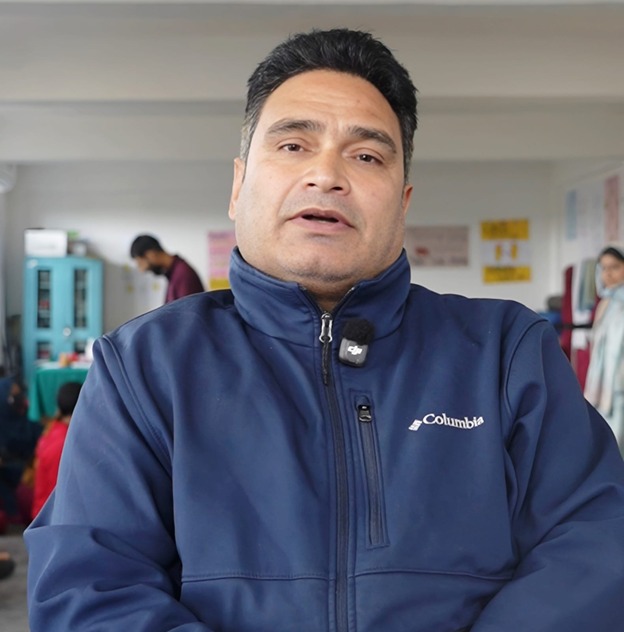
Srinagar, May 01: In 1997, Javed Ahmad Tak was a final-year B.Sc. student with the world at his feet. A sudden terror attack changed everything, leaving him with a spinal cord injury and a life-altering diagnosis: he would never walk again.
But where many would see a dead end, Tak saw a detour toward a greater calling. Today, the Padma Shri awardee stands as a titan of social reform in Jammu and Kashmir, proving that while his mobility was restricted, his vision was limitless.
After four years of being bedridden, Tak refused to let his education go to waste. He began by offering free tuition to local orphans, but a glaring absence caught his eye.
"I wondered why I didn’t see many disabled children coming to study," Tak recalls. A survey of nearby villages revealed a heartbreaking reality: children with disabilities were hidden away, their parents often unaware or despondent about their potential.
In 2001, this observation sparked the creation of the Zaiba Apa Institute. What started as a small intervention has blossomed into a lifeline for the region. To date, the institute has enrolled 300 full-time students.
Intervened in the lives of over 6,000 children. Assisted nearly 100,000 persons with disabilities through sports, business grants, and medical aids.
The Zaiba Apa Institute isn't just a school; it’s a rehabilitation powerhouse. For students who are deaf or blind, the institute provides specialized education through the 8th grade. For those for whom traditional academics are a hurdle, the focus shifts to livelihood.
From crafting paper bags to processing apple chips, Tak ensures that by the time a student turns 18, they possess the dignity of a paycheck. "Our goal is to ensure every student is not just educated, but employable," he says.
Despite receiving the Padma Shri, India’s fourth-highest civilian honor, Tak remains grounded in the daily struggles of his community. He is a vocal critic of "performative" accessibility.
"When we talk about accessibility, it’s not just about a ramp; it’s about the whole ecosystem," Tak asserts.
He advocates for the full implementation of the Rights of Persons with Disabilities (RPWD) Act 2016, dreaming of a Jammu and Kashmir where the "barrier free path" starts at a person’s front door and extends to every bank, park, and office in the state.
Tak’s most emotional plea is directed at the families of "specially-abled" children. He fights the social stigma that often keeps these children behind closed doors.
"They don’t need your sympathy, they need your support," Tak says.
"If they cannot walk, they might have a brilliant mind for computers, if they cannot see, they might have a soulful voice for music. Every child has a talent."
The future of Zaiba Apa is digital. Tak is currently looking to expand the institute’s vocational wing to include IT training and advanced physiotherapy. His journey from a hospital bed in 1997 to a national hero is a testament to the fact that disability is not a lack of ability, but a different way of navigating the world.
Related Posts
-

CM Omar Abdullah rolls out ₹84.41 crore multi-sector development works to transform Ganderbal
-

risingkashmirtesting
-

Srinagar Police Register Cases Against Srinagar MP, Ex-Mayor for Circulation of Misleading Online Content
-

Mehbooba Mufti criticises Centre for not condemning killing of Khamenei; burns Netanyahu, Trump posters
-

Uri farmers oppose new water supply scheme
-

All Schools, Colleges to remain closed for two days in Kashmir: Sakina Itoo
-

Flames On The Hills: Dry spell drives wave of forest fires across Valley
-

MeT Predicts Light Rain, Snow in J&K's Higher Reaches Till March 9
-

“God saved me”: Farooq Abdullah after escaping assassination attempt in Jammu
-

Mirwaiz Welcomes SC’s Bail Decision for Shabir Shah, Seeks Relief for Other J&K Political Prisoners
-

Mirwaiz Slams Govt Over Jamia Masjid Shutdown on last Friday of Ramzan, Draws Parallel with Al-Aqsa
-

CM Omar throws open Asia’s largest Tulip Garden in Srinagar
-

MeT Predicts Light Rain, Snow in J&K’s Higher Reaches Till March 20
-

Mughal Road Closed Following Fresh Snowfall at Pir Ki Gali
-

MeT Predicts Rain, Snow in J&K’s Higher Reaches

Leave a comment