From Ruins to Revival: Historic Mohra Hydel Project Set To Power Kashmir Again
-
 Idrees Bukhtiyar
- Comments 0
- 01 May 2026
IIT Roorkee DPR expected later this month: Officials
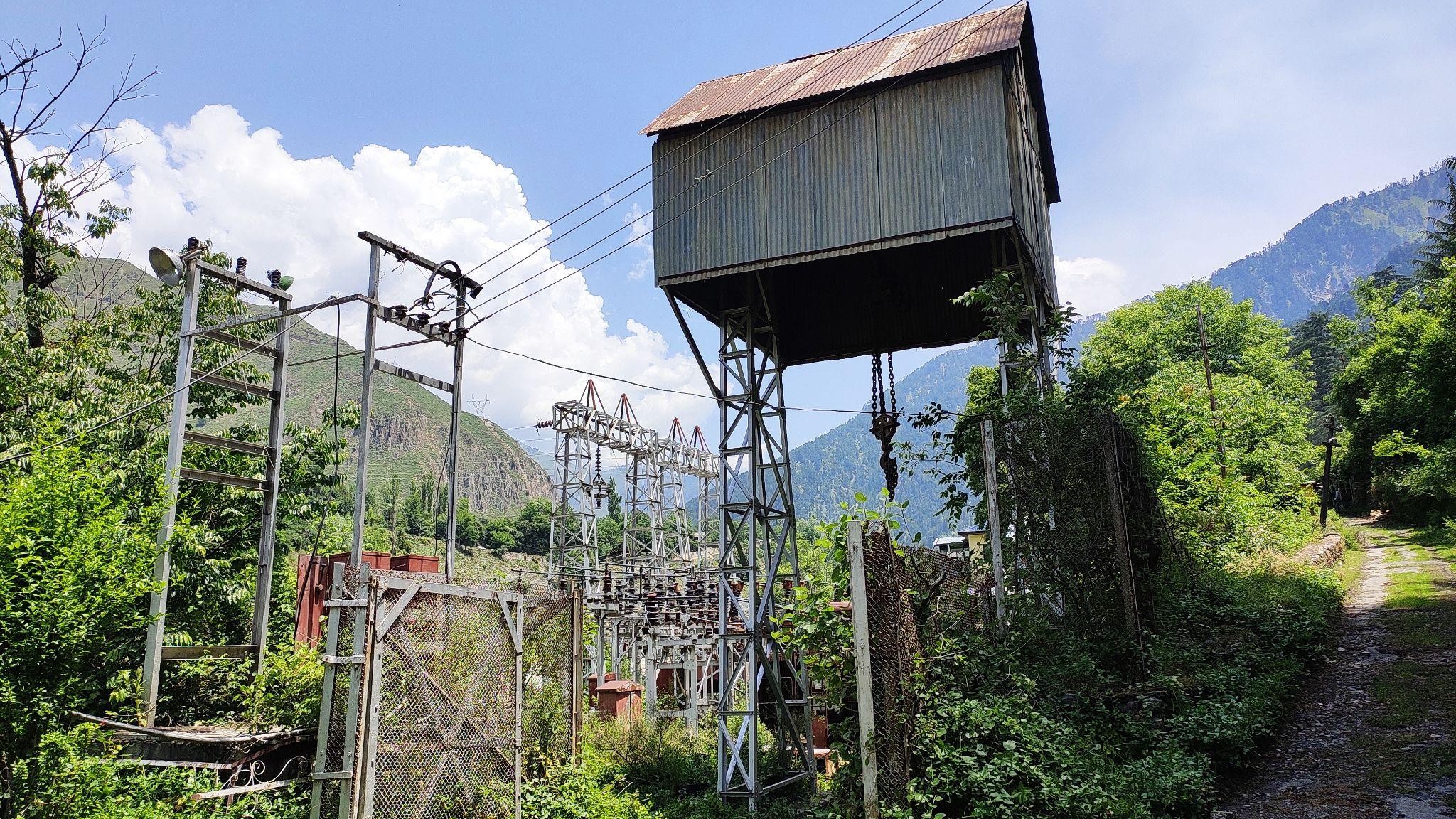
Srinagar, May 1: After lying silent for more than three decades, the historic Mohra Hydroelectric Power Project in north Kashmir’s Uri is inching closer to a revival, with the Jammu and Kashmir government fast-tracking efforts to restore the 124-year-old engineering landmark.
Officials say the long-awaited Detailed Project Report (DPR), being prepared by Indian Institute of Technology (IIT) Roorkee, is expected later this month, a key step that could finally set the restoration process in motion.
Managing Director of Jammu and Kashmir State Power Development Corporation (J&KSPDC), Rahul Yadav, said the government is keen to move swiftly once the DPR is submitted. “We are expecting the DPR in May. After receiving it, we will initiate the tendering process within this year,” he told Rising Kashmir.
“Teams from IIT Roorkee conducted multiple site visits across Kashmir in March and April as part of their groundwork for the report,” Yadav said.
The Mohra project, located along the banks of the Jhelum River in the Uri area of Baramulla district, has remained defunct since devastating floods in 1992 crippled its infrastructure. Now, the government plans to restore it under the Public-Private Partnership (PPP) model more than 30 years after it fell into disrepair.
Under this arrangement, JKSPDC, in collaboration with the Planning Development and Monitoring Department, will oversee the project’s renovation, modernization, and long-term operation and maintenance for a period of 20 years.
MLA Dr Sajjad Shafi emphasized the symbolic and practical importance of the project. “This is not just a power project, it is a landmark for Uri. Its restoration will improve electricity supply across the Kashmir valley and revive a part of our history,” he said.
The 10.5 MW project was originally approved under the Prime Minister’s Development Package (PMDP) 2015 at an estimated cost of ₹112.91 crore (2018 price level). However, progress stalled due to financial constraints.
In a written reply in the Assembly last year, the government noted that repeated requests to the Ministry of New and Renewable Energy (MNRE) for up to 60 percent central assistance went unanswered.
A fresh feasibility study conducted by IIT Roorkee in 2022 and submitted in November 2024 revised the project cost to ₹135.02 crore (2022 price level) and recommended funding support. Despite this, no financial assistance has yet been sanctioned.
The Mohra Hydroelectric Power Project is widely regarded as one of South Asia’s oldest hydroelectric installations. Built in 1902 by Canadian engineer Major Alian de Litbniere, it once stood as a marvel of early industrial engineering.
Among its unique features was an 11-kilometre-long wooden flume that carried water to generate electricity, an innovation far ahead of its time.
Local accounts trace its origins even further back, to the reign of Maharaja Ranbir Singh, when machinery for the project was transported from Rawalpindi on horse carts long before the Partition of 1947 reshaped the region.
The plant suffered damage during floods in 1959 but was successfully restored and expanded, with its capacity increased from 4 MW to 9 MW and later to 10.5 MW. It was formally handed over to the Jammu and Kashmir government in 1962.
Before its closure, Mohra supplied electricity to several parts of Jammu and Kashmir, including Srinagar and Uri. For locals, its revival represents more than just improved power supply, it is about reclaiming a piece of their shared heritage.
Related Posts
-

Gulshan Books: A cultural space for readers & thinkers
-

Kashmir’s singing sensation Aejaz Rah transitions from music to silver screen
-

No sour grapes as G’bal farmers reap high-quality bumper harvest
-

Hope rekindled in J&K’s Tourism Sector after CM's assurances
-

“Kashmir is Calling”: First road show from Dal Lake to Anantnag sends a message of peace & unity
-

Inspired by output, Kokernag farmers plants hope with Hazelnuts
-

As calm returns to LoC, border families face long road to recovery
-

J&K sizzles under relentless heatwave, docs urge precaution
-

Pahalgam attack shatters Kashmir’s film tourism revival
-

Tourism defies Terror: ‘Chalo Kashmir’ sends national message of unity
-

Kashmiri Haj pilgrims fight for basic comfort & care in Saudi Arabia
-

With pen as sword, Chander M Bhat’s fight to preserve Kashmiri Pandit culture
-

First Cherry cargo train set to depart from J&K for Mumbai on June 3
-

35-year battle ends with Shiv Lingam’s return to Jogishwari Mandir, Rainawari
-

Eid-ul-Adha Gift: In a first, SMC to provide free door-to-door hooper service for safe disposal of animal waste

Leave a comment